Most service businesses restart at zero every month. Whatever you sold in June is gone by July, and the owner ends up running a permanent sales operation beside the actual company.
Contract cleaning breaks that cycle. An agreement to service a 40,000-square-foot medical office three nights a week doesn’t need re-winning in February. It renews, it invoices on a schedule, and it appears in next year’s projections before the year starts.
That structure pulls experienced operators toward a commercial cleaning franchise rather than higher-ticket project work. The recurring revenue is real. So is a recurring cost most prospectuses skip — and that cost, not demand, determines who keeps the contracts.
Why Commercial Cleaning Contracts Beat One-Off Work
Project work re-pays its acquisition cost with every job. A contract pays that cost once and spreads it across the life of the account.
IBISWorld puts U.S. janitorial services revenue at $112.0 billion in 2026, with commercial cleaning making up more than 80% of it. The International Franchise Association’s 2026 Franchising Economic Outlook, prepared by FRANdata, ranks commercial and residential services among the fastest-growing franchise categories this year. The strongest cleaning franchise opportunities are built on contracts rather than consumer bookings for exactly that reason.
What Happened to Cleaning in the Last Recession:
Most articles in this category call commercial cleaning recession-proof and move on. The record is more specific.
market data Enterprises reported that industry receipts fell 4.6% in 2009, the steepest decline since 1993, citing the recession, the housing bust, the collapse of commercial real estate, and low-ball pricing. Facility managers met tight budgets by cutting frequency, bringing work in-house, or switching to a cheaper vendor. Commodity janitorial proved cuttable.
The specialized end was expected to hold up better. market data’s outlook projected that niches including disaster restoration, HVAC, and air duct cleaning would outgrow commodity janitorial services. Resistance in this sector follows what you’re qualified to do, not the contract itself.
Why B2B Accounts Stay Put:
Rebidding costs a facility manager new background checks, fresh access credentials, updated insurance certificates, and a month of complaints while a new crew learns the building. Few will bother without a reason. Note, though, that an annual contract carrying a 30-day termination clause is really a monthly contract in a suit — consistency protects the renewal, not the paperwork.
The three verticals reward different things:
- Offices — the easiest entry, the toughest pricing. Volume carries the margin.
- Medical and dental — infection-control protocols raise the barrier to entry, which protects you once you clear it. BLS projects healthcare and social assistance to add more jobs than any other sector through 2034.
- Industrial — specialized equipment thins the bidding field.
Is a Cleaning Business Profitable? The Turnover Problem:
bench marking from the Building Service Contractors Association International puts labor between roughly 50 and 65 percent of revenue once payroll taxes, workers’ compensation, supervision, and training are fully loaded in — lower figures usually count base wages only. IBISWorld pegs the industry’s average net margin near 6.3%, weighted heavily by large firms competing on price.
Then there’s the figure that governs the rest. Industry estimates place annual turnover in commercial cleaning far above the 30–40% national average across all industries, with contract cleaners commonly reporting 100% or higher and some studies ranging as high as 375%. Replacing one front line cleaner runs $1,000–$5,000.
Run that math and the answer to is a cleaning business profitable turns concrete: a 25-person operation turning over its roster once a year spends tens of thousands restaffing itself, before a single account is lost to service gaps. Retention is the margin lever, well ahead of pricing.
Where the Restoration Pairing Earns Its Keep:
Collection cycles that offset each other
Restoration crews mobilize within hours of a loss, but carriers typically pay in stages across a window the industry commonly puts at 60 to 120 days. Cleaning contracts invoice monthly on ordinary terms, funding the gap the restoration side creates.
A full-time job instead of two part-time ones:
You don’t fix turnover like that with a pizza party. Steady hours, a training path, and varied work move it — and a combined book supports all three where a pure cleaning route struggles to.
The models do compete for the same people. A 2 a.m. water loss and three nightly office accounts need covering at once, so the pairing demands bench depth rather than a leaner crew.
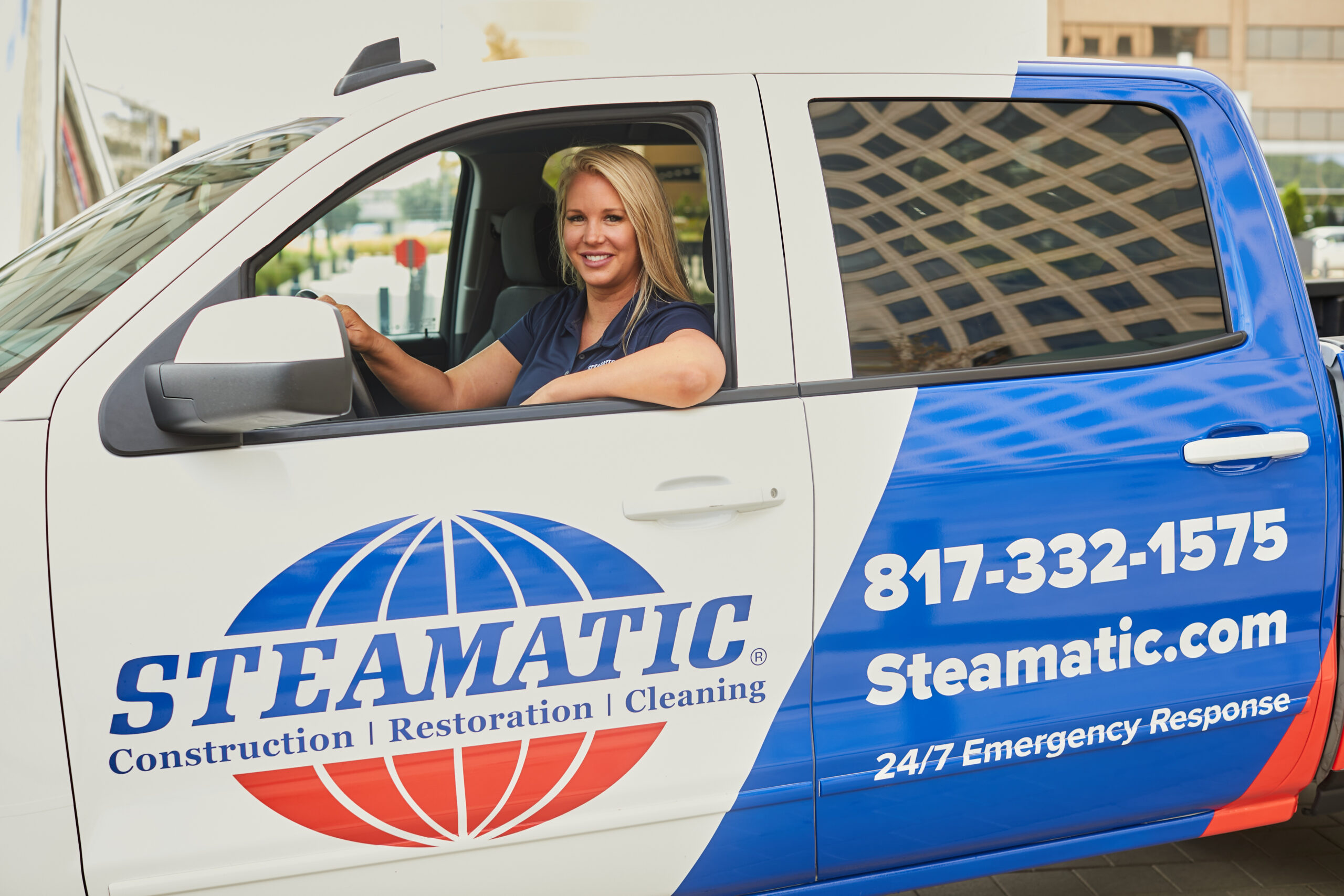
Steamatic illustrates the combined structure. Operating since 1968, its restoration and cleaning services run emergency water, fire, and mold work alongside routine commercial contracts and specialty services like HVAC and duct cleaning, with territory and support details published through its franchise ownership program.
FAQs:
Q1. How many accounts before this replaces my salary?
Depends on contract size, but plan on a portfolio rather than a few anchors — and on working billable hours yourself in year one.
Q2. How long do commercial cleaning contracts run?
Annual with automatic renewal, typically carrying a 30- to 60-day termination clause. Treat that clause as the real term.
Q3. What do commercial buyers require before signing?
Proof of insurance, background-checked staff, a formal proposal, and evidence you can cover shifts across multiple sites.
Q4. How do I evaluate the best cleaning franchise for me?
Compare training depth, post-opening support, and territory rights — then ask existing owners what their crew turnover looked like in year two.
Q5. What are the best cleaning franchise opportunities available now?
Some of the best cleaning franchise opportunities available today are those that offer multiple revenue streams, strong brand recognition, and ongoing franchise support.
- Steamatic – Offers residential and commercial cleaning, water and fire restoration, mold remediation, air duct cleaning, and reconstruction services. Its diverse service portfolio and established brand make it a strong choice for long-term growth.
- JAN-PRO – Specializes in commercial cleaning with a proven franchise model and recurring business clients.
- Stratus Building Solutions – Focuses on econ-friendly commercial cleaning and flexible ownership options.
- Molly Maid – A well-known residential cleaning franchise with nationwide brand recognition.
- The Cleaning Authority – Offers recurring residential cleaning services with comprehensive training and marketing support.
If you’re looking for a franchise with high growth potential, Steamatic stands out because it combines cleaning, restoration, and reconstruction services, allowing franchisees to generate revenue from both recurring cleaning contracts and high-value emergency restoration projects.
Final Thoughts:
A commercial cleaning franchise gives you revenue that renews instead of resetting, and pairing it with restoration means steady contracts cover payroll while carrier payments work their way through.
Before you sign anything, price the labor at full cost — wages, taxes, workers’ comp, supervision, and the replacements you’ll be hiring all year. Contracts are the easy part to win. Staffing them is the business.